
Little Animals

Richard is not only a political activist, but the nagging voice the narrator would rather not hear. He cannot reconcile the damage being done to the world with the everyday business of carrying on; he sees things others can't (or do not want to). When he meets the narrator’s newly-born daughter, Richard asks: “How are we going to protect her?” That question belongs to everyone in the room.
Ready does an excellent job of inhabiting these different people without reaching for tricks: particularly impressive given the austerity of the production. There is nothing else in the room. The audience sit in the round in the Lyceum's brightly lit rehearsal space, while Ready has to carry everything himself.
But that also exposes its weaknesses. The switching between the narrator and Richard can sometimes become jarring. As there is little differentiation between them, it is occasionally difficult to work out who we are listening to. Although perhaps that's the intention? Richard absolutely becomes as much a voice inside the narrator’s head as a character in his own right.
Ready's high-octane performance is at once impressive and exhausting, and the lack of external intervention can be similarly double-edged.
I did wonder what a little more lighting, sound or theatrical machinery might have done. While the austerity is clever, and refreshing, it is not necessarily the only interesting choice that could have been made.
There is some preaching here, although it is more carefully embedded than most climate shows this Fringe. Richard’s are seldom subtle, though the show finds a more interesting way of making its argument by turning climate anxiety into a relationship and, eventually, into a kind of silence.
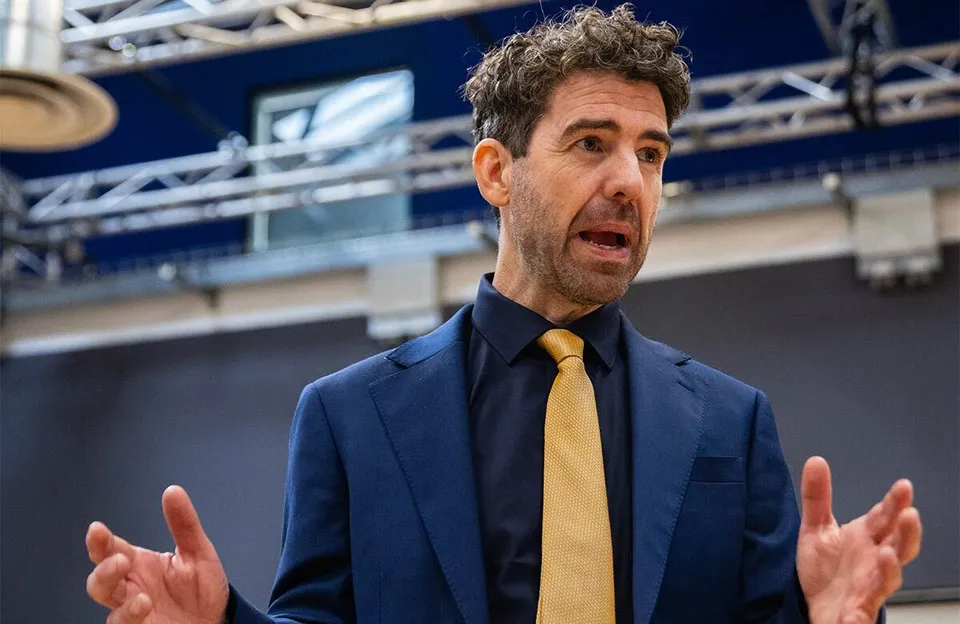
Little Animals by Fern Culture. Credit Chew Boy.
Ran from 18–30 August, except 24 August at 4:00pm, with additional performances on 18, 19, 22, 23, 25, 26, 29, and 30 August at 1:30pm and on 18, 19, 20, 22, 25, 26, 27, 28, 29, and 30 August at 4:00pm as part of Fringe 26.