
The Tailor of Inverness

The audience enters to a wall of bleached, stitched-together clothes. Stars are projected onto their surface as the violin begins, while Zajac’s voice becomes the sounds of wolves approaching through the snow. It is disturbing and disorientating. Then, without warning, we are in a bright Inverness tailor’s shop, hearing about the journey from Glasgow, before Zajac steps through the rack and finds himself back among the wolves.
The transitions feel like memory in a sudden, vivid and incomplete way. The violin gives those shifts texture, helping us navigate from central Europe through the Middle East as the geography keeps changing, while Zajac’s transformations are so practised they barely need announcing. A military jacket becomes a soldier; a mannequin becomes a girl; a scarf turns her into a series of different women; a shirt becomes a friend. Zajac's Clubmasters move him between himself and his father, while a hand inside a sleeve becomes breath in a body.
The transformations take on another weight as Mateusz’s wartime experience emerges in fragments, with borders shifting, people disappearing and memories refusing to stay fixed. Slowly, we learn the show's purpose: Mateusz’s son is trying to understand the man who cannot give him the whole story. The jolly, often joking Mateusz that Zajac expertly creates can suddenly give way to anger and hatred, leaving behind a complex figure.
This is the second time I have seen The Tailor of Inverness. Eighteen years on, the production feels thoroughly settled. Zajac knows this material inside out, and that confidence shows in the precision of the performance.
Most importantly however, the story has not become safely historical. War still determines what families remember, what they lose and what their children inherit. “We are the children of war,” we hear at the end. Those words feel uncomfortably current.
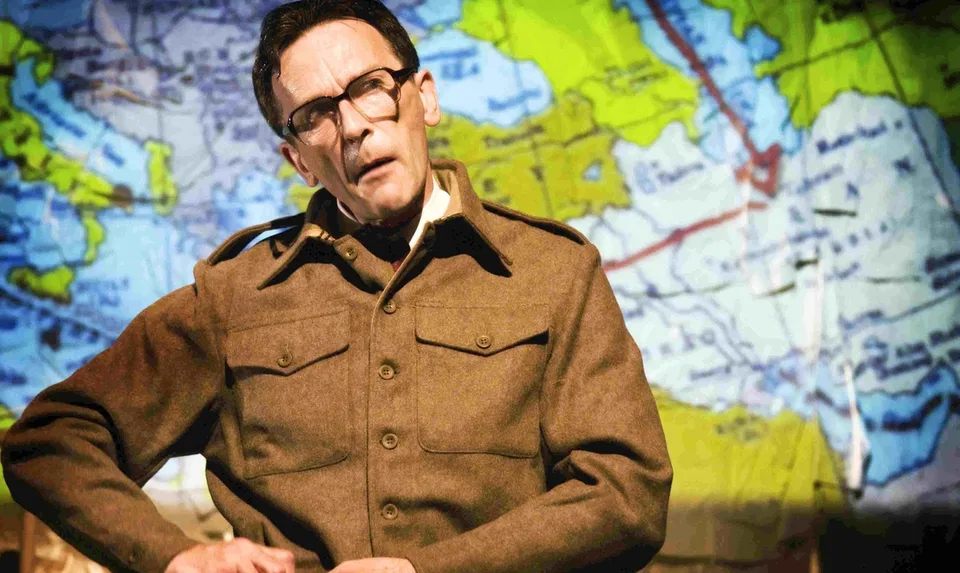
The Tailor of Inverness by Dogstar Theatre Company.
About the Show
Ran from 7–8 September.